

Free written scope consultation - allowances, timeline, and change-order rules on paper before a single trade is scheduled
Tuff Shed Kitchen Remodeling: The Austin Owner’s Guide
If you’ve got a Tuff Shed structure on your Austin property and you’re wondering whether it can become a real kitchen, the answer is yes, and a full Tuff Shed kitchen remodel in Austin typically runs $14,000 to $45,000 installed. That range covers everything from running new electrical and plumbing to hanging cabinets, setting countertops, and finishing the space to code. We stock and install Tuff Shed-compatible kitchen components, and we can usually have a crew out within a few days to assess your structure.
Most owners call us when they’ve realized the shed they bought for storage or a workshop needs to do more. Maybe you’re building out an ADU for a parent, maybe you’re setting up a rental unit, or maybe you just want a dedicated kitchen away from the main house. The first question is always the same: can this structure handle it? In most cases, yes, but there are specifics about Tuff Shed construction you need to know before cutting into walls or running gas lines. That’s what this page covers.
Which Tuff Shed Models This Applies To
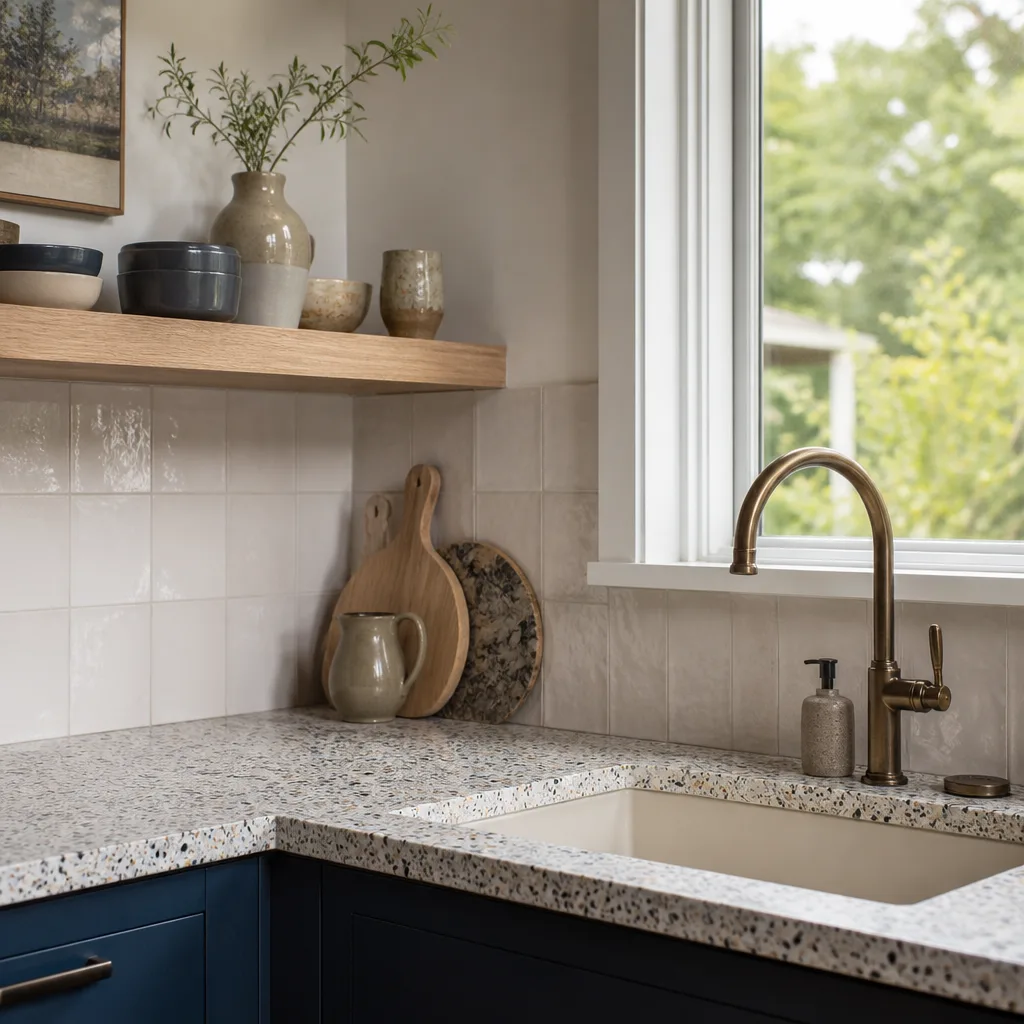
Tuff Shed builds several series lines here in Texas, and the kitchen-remodel path looks different depending on which one you own. The Premier Pro Series and Premier Ranch Series are the most common candidates for full kitchen conversions because they come with higher wall heights, stronger floor systems, and, in some cases, engineered plans that make permitting in Travis County and the surrounding Austin metro smoother. The Sundance Series and basic utility models can technically be converted too, but you’ll spend more on structural upgrades before you ever touch a cabinet.
Here’s the compatibility gotcha most people don’t realize: Tuff Shed floor systems are rated for specific live loads, and a kitchen with appliances, stone countertops, and cabinetry can weigh significantly more than the stock floor was designed to carry. A 65-pound-per-square-foot rating may be fine for a workshop bench, but a full run of lower cabinets with a Cambria or Silestone countertop can push 100 pounds per square foot in concentrated areas. That doesn’t mean you can’t do it. It means we need to check the joist spacing and possibly reinforce the floor before cabinets go in. We’ve done this on Tuff Shed conversions from Pflugerville to Buda, and it’s a standard part of our assessment.
For the parts themselves, Tuff Shed doesn’t manufacture kitchen components. The structures come with standard framing and sheathing, and the kitchen parts are all third-party: KraftMaid cabinets, Cambria or Silestone countertops, Kohler or Moen fixtures. That’s good news for you, because it means you’re not locked into any proprietary sizing. Standard 24-inch-deep base cabinets fit Tuff Shed wall framing without modification in most cases. The one thing worth checking is wall thickness. Tuff Shed uses a range of stud depths depending on the model and any insulation package you purchased. If you have 2×4 walls, cavity depth limits which electrical boxes and plumbing runs will fit without surface mounting.
We’re an independent contractor, by the way. Mason Remodeling Co Austin is not affiliated with Tuff Shed directly. We work on their structures all the time, but we don’t sell Tuff Shed buildings and we can’t process Tuff Shed warranty claims. What we can do is match the right aftermarket parts to your specific series and make sure the work meets Austin code.
Styles & brands we work with







Signs Your Tuff Shed Kitchen Remodeling Is Failing
If you’ve already partially converted your Tuff Shed and things aren’t holding up, here’s what we typically see. These are the five failure patterns that bring Austin owners to us for repair or rework:
- Cabinet doors sagging or pulling away from the wall. Tuff Shed interiors expand and contract more than a climate-controlled home, and the humidity swings in Austin make cheap cabinet anchors work loose. When a cabinet pulls off the wall stud, the fix is often re-anchoring into solid framing, not just driving another screw.
- Countertop seams separating or cracking. A Tuff Shed sits on a raised floor that flexes slightly as temperatures change. Rigid stone tops installed without flexible seam treatment will crack at the joint. We use seam techniques specific to structures that move.
- Electrical drops that flicker or trip breakers. A lot of shed kitchens get undersized subpanels or thin-gauge wire run from the main house. If your lights dim when the microwave kicks on, your feed is undersized for the load. That’s not a nuisance; it’s a fire-risk conversation.
- Water staining on the bottom plate or lower walls. Tuff Sheds in Austin deal with heavy spring storms, and if your kitchen plumbing wasn’t properly sleeved and sealed where it passes through the wall or floor, you’ll see damage at the base. Early intervention means fixing a leak. Late intervention means replacing rotted framing.
- Floor bounce under the refrigerator or range. That’s the load-rating issue I mentioned. If you feel the floor deflect when you open the fridge door, the subfloor and joists weren’t reinforced for appliance weight. It can be fixed by sistering joists from below or adding a mid-span beam.
The earlier we see any of these, the cheaper the fix. Water damage and structural deflection compound. A $600 seam repair in January is a $4,000 countertop replacement by August if it’s left to spread.
Replacement Cost & What’s Included
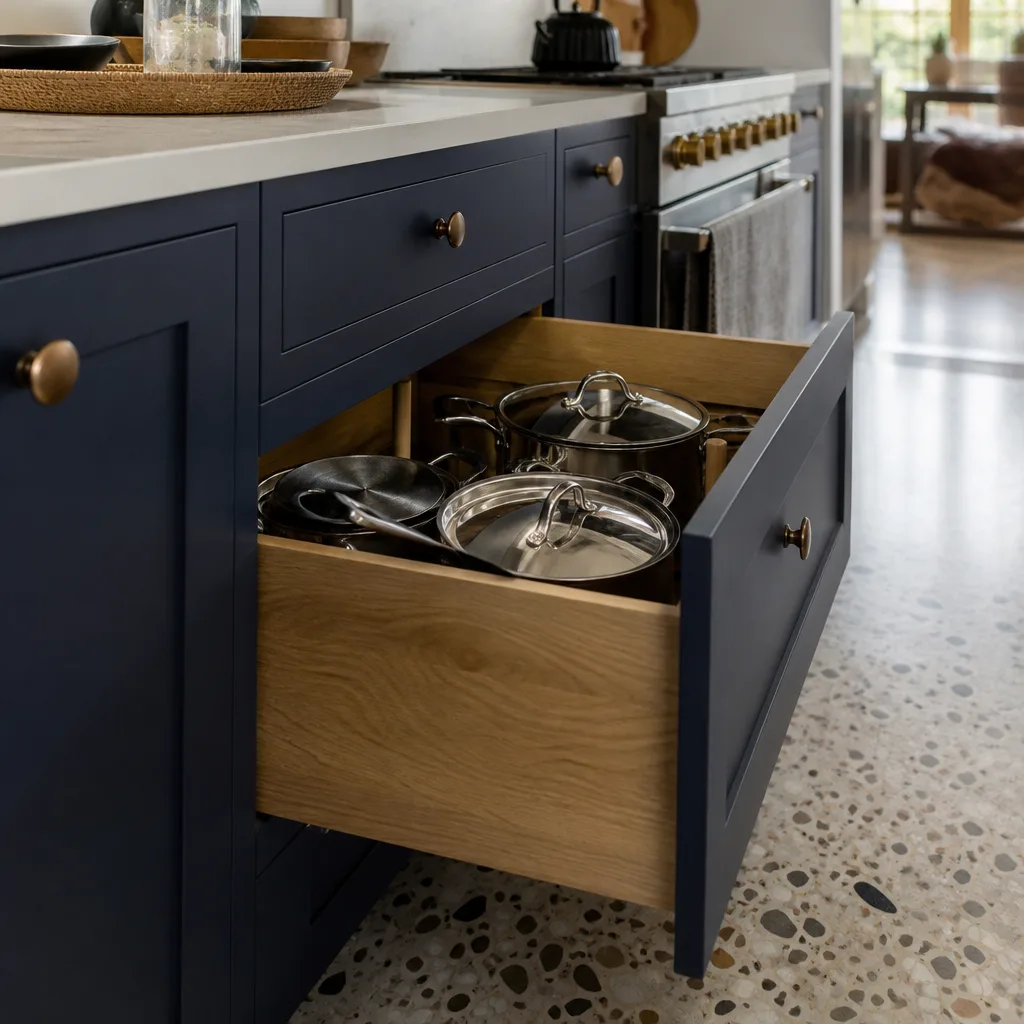
Here’s what a Tuff Shed kitchen remodel actually costs in Austin, broken into the pieces most owners need. These ranges reflect current local labor rates and material pricing, and they assume the structure is already in place and in reasonable shape:
- Full Tuff Shed kitchen remodel: $14,000 – $45,000
- Small kitchen or kitchenette build-out: $9,000 – $20,000
- Cabinet installation (KraftMaid or equivalent): $4,000 – $13,000
- Countertop installation (Cambria, Silestone, or similar): $2,000 – $6,500
- Backsplash installation: $800 – $2,500
- Kitchen island installation: $3,000 – $10,000
What drives the spread? Three things. First, square footage and layout. A 10×12 Tuff Shed kitchenette with a small fridge and a two-burner cooktop is a different job than a 12×20 full kitchen with a range, dishwasher, and island. Second, utility work. If we’re trenching for a new gas line or upgrading the electrical service from the main panel to the shed, that’s real cost. Third, material grade. KraftMaid cabinets start at a solid mid-range price point, but Cambria and Silestone countertops vary by color series, and that can move a job by thousands.
Every quote we give is written. You’ll see line items for parts, labor, and any structural or utility work before we start. The price we write is the price you pay. If we find hidden damage once we open a wall, we stop, show you what we found, and adjust the quote in writing before moving forward. No surprise invoices.
All our Tuff Shed kitchen work is covered by the 365-Day Done Right Promise. If anything we installed fails within a year of the completion date, we come back and make it right at no cost to you. That’s not a verbal assurance. It’s in the written guarantee you get on every project.
See the difference
 Before
 After
After Before
 After
After Before
 After
AfterDIY or Call Us?
I’ll be straight with you: there are things worth checking yourself, and things that will hurt you or your shed if you get them wrong. Isaac Pruett has told more than one Austin homeowner, “Tell me what’s wrong with it. We’ll figure out what it actually needs.” Sometimes that means tightening a hinge the owner honestly didn’t know was adjustable. Other times it means finding a wiring situation that should have never been run.
Here’s the honest split. You can safely check cabinet attachment points, look for visible water staining, test your breakers, and see if your countertop seam has visible separation. You should not open walls to inspect wiring, attempt to run a new electrical feed from your house, cut into load-bearing framing for a window or pass-through, or try to fix a floor that’s bouncing under appliance weight. Those jobs involve electricity, structural loading, and in some cases plumbing that needs to meet Austin’s specific code requirements. One wrong cut into a Tuff Shed wall can compromise the structure in a way that’s expensive to undo.
If you’re not sure which category your issue falls into, call us at (903) 623-1966. We’ll ask the right questions, and if it’s something simple, we’ll tell you how to handle it yourself. We’d rather earn your trust with straight answers than sell you a service call you don’t need.
FAQs
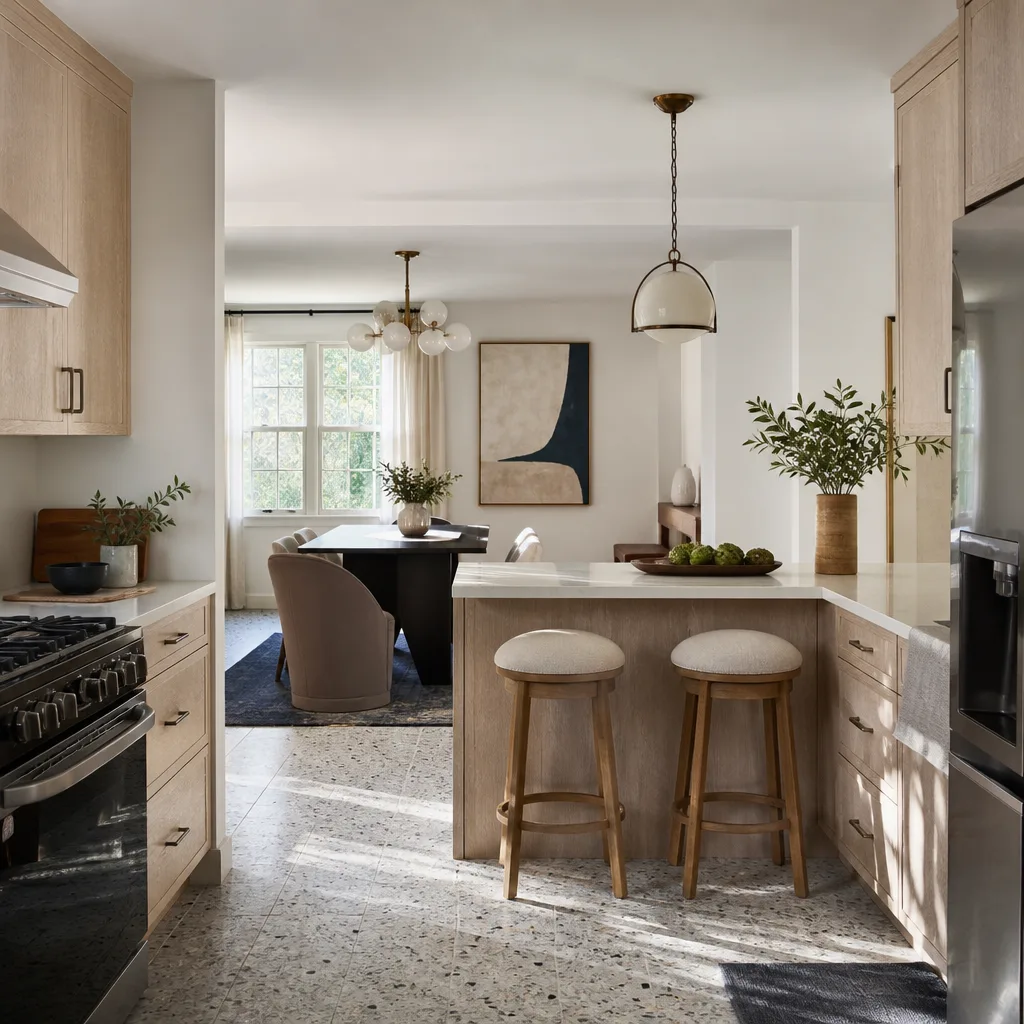
A properly built Tuff Shed kitchen in Austin should last 15 to 25 years for cabinets and countertops, with the limiting factor being Austin’s humidity and temperature swings, which stress adhesives, sealants, and wood joints faster than a climate-controlled home. Electrical and plumbing runs, done to code, last 30-plus years. The workmanship warranty on what we install covers 365 days from completion, and we use materials and techniques chosen for this climate, not for a showroom in Ohio. Call (903) 623-1966 if you’d like us to look at an existing conversion and tell you what’s left in it.
In most cases, yes, and the repair is almost always cheaper than a full redo. A cracked countertop seam, loose cabinet anchors, an undersized electrical feed, or a leaking plumbing penetration can each be fixed without gutting the space. Where repair stops making sense is when water damage has rotted framing or when the original work was so far out of code that retrofitting would cost more than starting fresh. The only way to know is an assessment. Estimates are free, and you’ll get a written price either way.
A small kitchenette build-out in a Tuff Shed typically takes two to three weeks. A full kitchen with new electrical, plumbing, cabinets, countertops, and island work usually runs four to six weeks. The variables are permitting time with the City of Austin or Travis County, utility trenching if you need new gas or upgraded electrical service, and any structural floor or wall reinforcement that has to happen first. We’ll give you a schedule in writing before work starts, and we stick to it.
We supply the materials. Our truck and warehouse stock cover the common stuff: standard-depth cabinet boxes, sink bases, the mount hardware rated for shed wall framing, and seam treatments for stone countertops on flexing floors. For the big-ticket items like KraftMaid cabinet lines, Cambria and Silestone countertop slabs, and Kohler or Moen fixtures, we order direct from our supplier partners. You don’t chase down a single part number unless you want to. We handle procurement, delivery, and warranty coordination.
Get a Straight Answer on Your Tuff Shed Kitchen
If you own a Tuff Shed in Austin and you’re planning a kitchen conversion or dealing with one that’s failing, the fastest way to get answers is a conversation. Call (903) 623-1966 and a live person will answer, 24 hours a day, seven days a week. No phone trees. We’ll set up a time to look at your structure, take measurements, check the load rating and utility situation, and give you a written price before any work starts. That’s how we’ve done it since 2004, and it’s how we’ll do it on your shed.
Written by Isaac Pruett, Owner, Mason Remodeling Co Austin at Mason Remodeling Co Austin, serving Austin and nearby areas.


