

Free written scope consultation - allowances, timeline, and change-order rules on paper before a single trade is scheduled
Schluter Home Additions & ADU: The Austin Owner’s Guide
If you’re researching Schluter systems for a home addition or ADU in Austin, you’re likely at the point where waterproofing, uncoupling, or edge-protection decisions are about to get made, and you want to know what actually holds up here. A Schluter-based addition or ADU in Austin typically runs $45,000–$130,000 all-in, depending on square footage, foundation work, and how much of the Schluter system you spec. We stock and install Schluter-compatible materials for these projects, and we’ll tell you plainly what’s worth the money and what isn’t before you spend a dime.
Most homeowners call us after they’ve already seen a failure: cracked tile in a bathroom addition, water staining at a shower curb, or an ADU floor that’s buckling because the uncoupling layer was skipped. By then, the fix is more expensive than doing it right the first time. The good news is that Schluter parts are forgiving when installed correctly, and we carry the common profiles, membranes, and drains on our trucks in Austin.
Which Schluter Models This Applies To
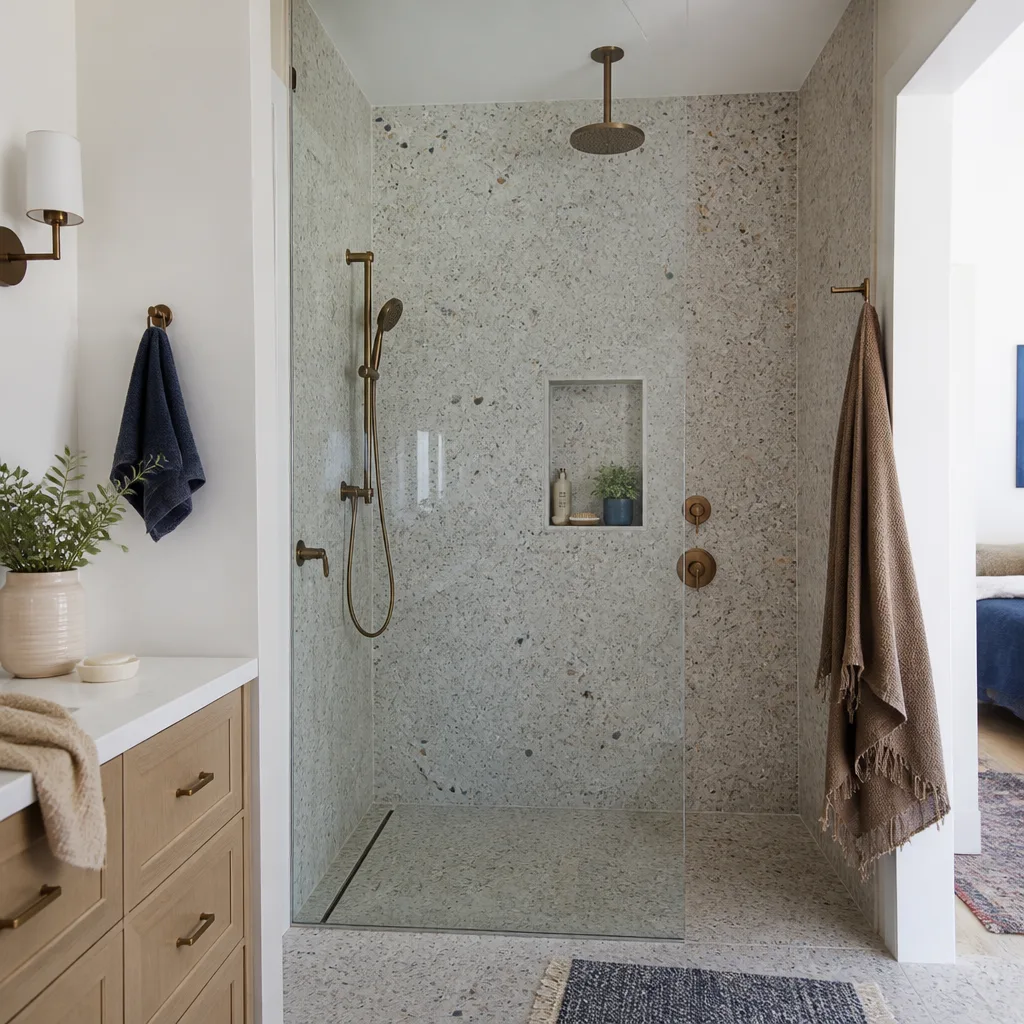
Schluter makes a few systems that matter for additions and ADUs, and the compatibility questions are real. The big three are KERDI (waterproofing membrane and board for showers and wet areas), DITRA (uncoupling membrane that goes under tile to prevent cracks when the subfloor moves), and Schluter profiles (the metal trim strips that finish tile edges at transitions). Within those lines, there are versions: KERDI-BOARD comes in thicknesses from 3/16″ to 2″, DITRA comes in standard and DITRA-HEAT versions, and profiles come in dozens of heights to match specific tile thicknesses.
The gotcha we see in Austin regularly: DITRA is not a crack-isolation membrane. It’s an uncoupling membrane. If your slab has an existing crack that’s actively moving, DITRA won’t stop it from telegraphing through the tile. You need DITRA over a properly prepared substrate, and on Austin’s expansive clay soil, that substrate prep matters more than the membrane itself. We also see mismatched profile heights, a 5/16″ profile ordered for 3/8″ tile, leaving a lip that catches toes and chips edges. For OEM vs aftermarket: Schluter’s own profiles are extruded aluminum or stainless steel with a specific anchoring leg design that locks into thin-set. Cheap aftermarket trims don’t seat the same way and tend to pull loose at the ends within a year or two. We stock genuine Schluter profiles, KERDI membrane, KERDI-BOARD, and DITRA on our trucks for Austin jobs, and we also carry KraftMaid, Cambria, and Silestone materials for the finished surfaces those Schluter systems protect.
Styles & brands we work with







Signs Your Schluter Home Additions & ADU Is Failing
- Tile cracking in a diagonal line across the floor. This usually means the subfloor or slab is moving and there’s no uncoupling membrane, or the membrane was installed over a substrate that was still shifting. In Austin, soil movement under a slab addition is the most common trigger.
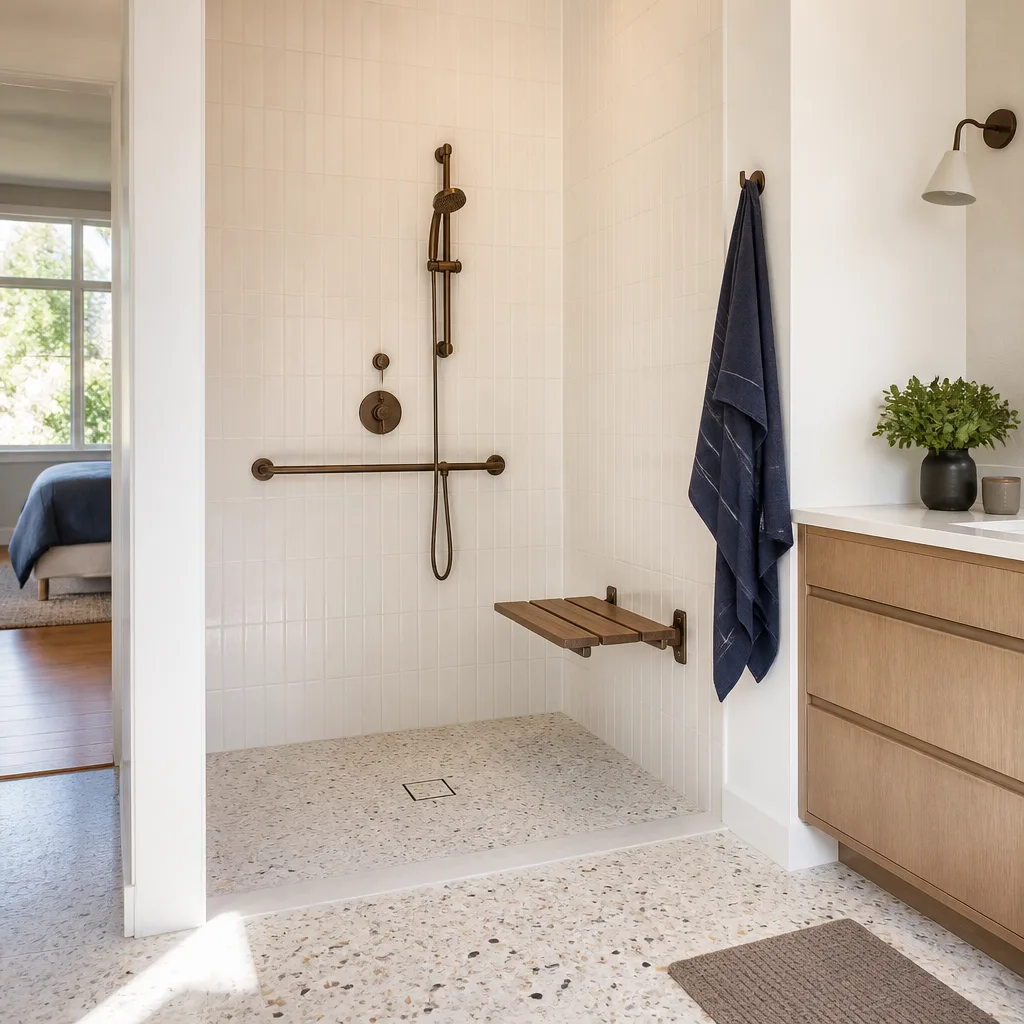
- Water stains or musty smell at the base of a shower wall. KERDI is only as good as its seam coverage. A two-inch seam overlap is required at every joint, and when an installer rushes, water finds the gap. MOLD staining on the drywall behind the shower is the tell.
- Grout cracking along the edge where tile meets a profile. The profile’s anchoring leg wasn’t fully embedded in thin-set, so the metal flexes independently of the tile. Over time, that motion breaks the grout line and the profile starts to lift at one corner.
- Hollow-sounding tile when you tap it. Thin-set coverage under DITRA needs to be near total. Voids mean the membrane isn’t bonded everywhere, and those spots become crack points and water channels.
- Shower floor draining slowly or pooling at the corners. Schluter’s sloped shower trays and linear drains have a specific slope built in. If the tray was set on an unlevel slab — common in older Austin homes — water pools instead of running to the drain, and standing water eventually wicks into the grout and membrane seams.
See the difference
 Before
 After
After Before
 After
After Before
 After
AfterReplacement Cost & What’s Included
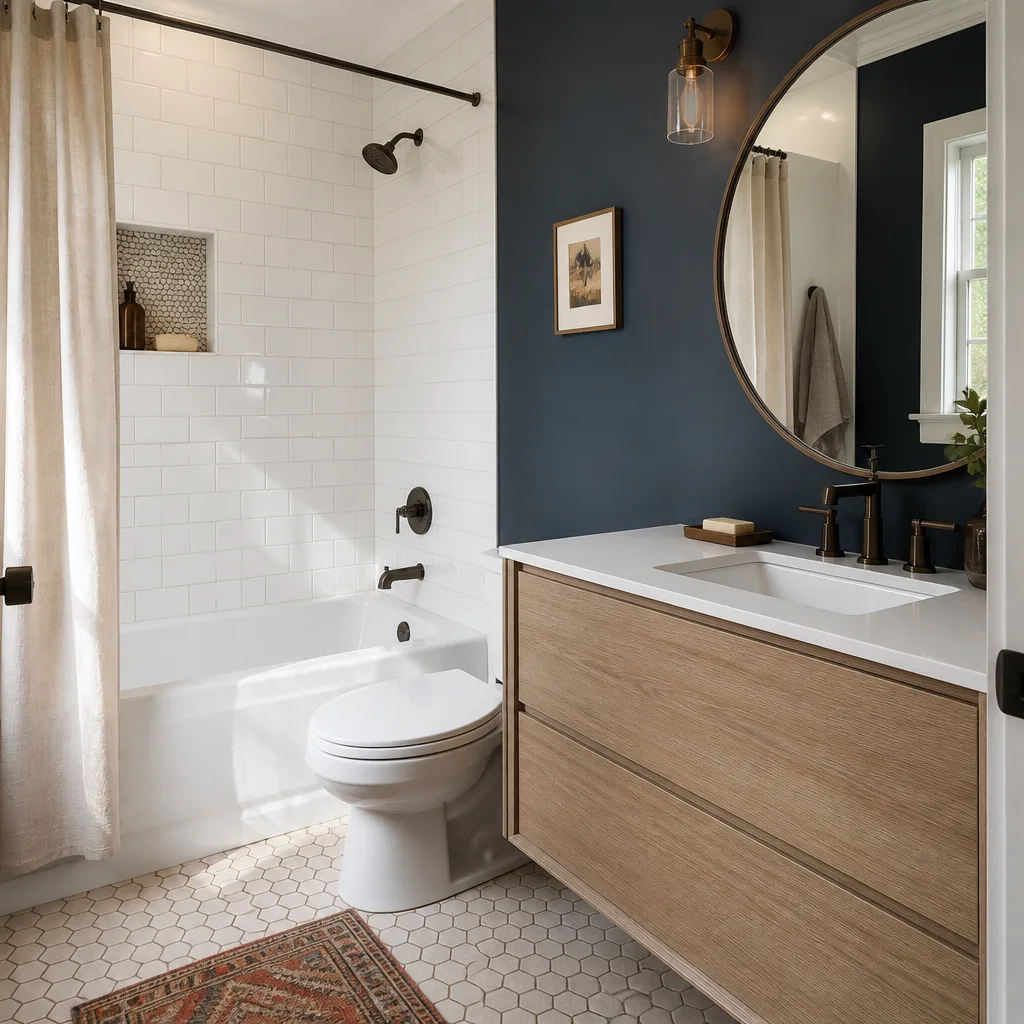
A full Schluter-based addition or ADU in Austin runs $45,000–$130,000, and that range reflects what you’re actually building. A simple single-room addition with one bathroom, KERDI shower, DITRA floor, and Schluter edge profiles sits at the lower end. A stand-alone ADU with a full kitchen, bath, separate electrical service, and foundation work in a neighborhood like Mueller or Cherrywood pushes toward the top. The Schluter materials themselves are a small slice of that — maybe $2,000–$6,000 depending on scope — but they’re the part that determines whether the tile and waterproofing last ten years or thirty.
We write the price before any work starts. That price includes materials, labor, disposal, and any permit work, and it doesn’t change unless you change the scope. If a Schluter installation we did fails within 365 days of completion, we come back and fix it at no cost. No dispute process, no conditions.
DIY or Call Us?
Waterproofing and uncoupling are not dangerous in the way a garage-door spring or an electrical panel is, but the failure mode is invisible until the damage is done. A homeowner can absolutely check their existing installation: look for cracked grout at profile edges, tap tile for hollow spots, and check shower corners for water pooling. What a homeowner should not do is peel up a failed membrane and re-set it without addressing why it failed. If the slab is moving, a new membrane buys you a year, maybe two. That’s the expensive lesson we see repeated in Austin’s clay-soil neighborhoods.
If you’re mid-project, unhappy with a previous contractor’s Schluter work, or planning an addition and want the waterproofing done right the first time, call us at (903) 623-1966. Isaac Pruett will talk through what you’re seeing and what it actually needs, not what a sales script says it needs. Tell me what’s wrong with it. We’ll figure out what it actually needs.
FAQs
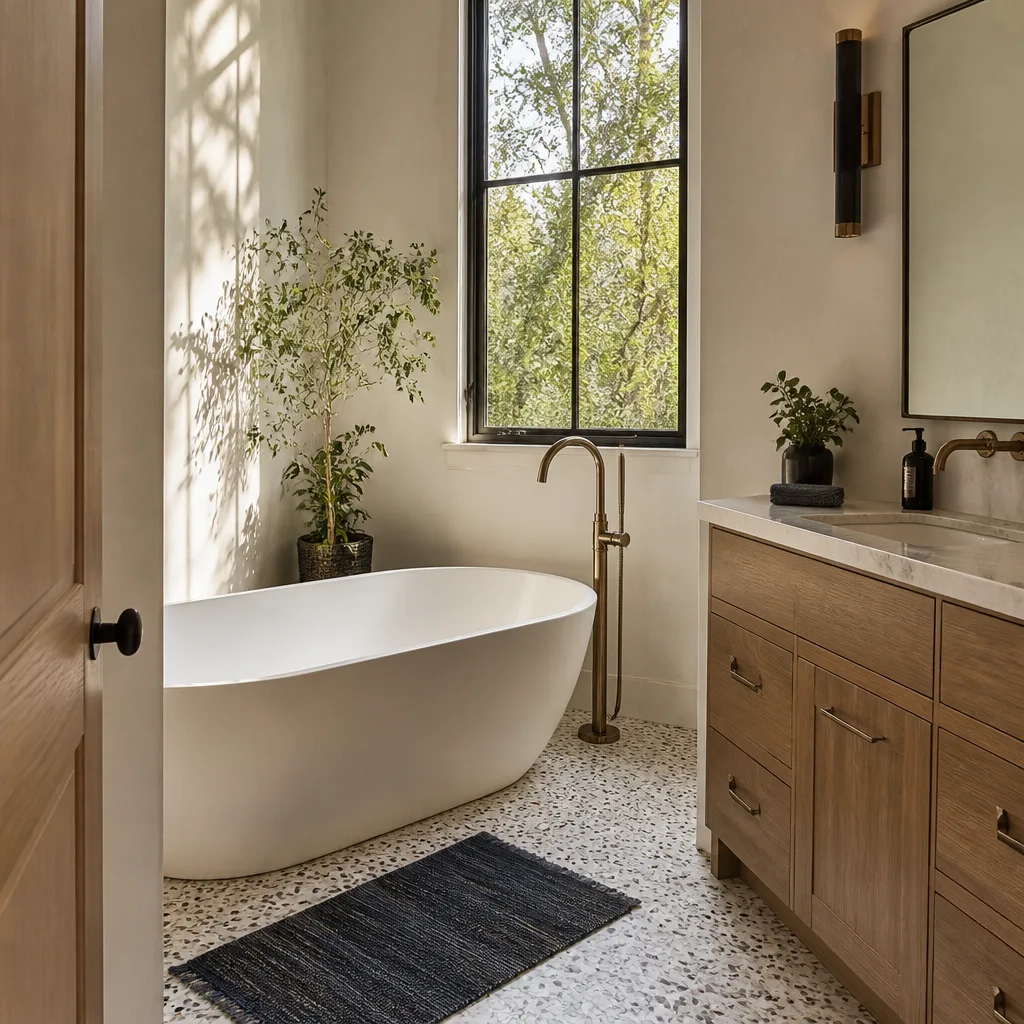
A properly installed Schluter KERDI or DITRA system lasts 30 years or more, but Austin’s expansive clay soil and summer heat cycles mean the substrate underneath is the weak link. The Schluter membrane itself doesn’t fail; the assembly fails when the slab or subfloor moves and the membrane wasn’t installed over a properly prepared surface. Call (903) 623-1966 for an evaluation of your specific foundation and substrate.
Sometimes, yes. Hollow spots under DITRA can occasionally be injected, and a loose profile end can be re-embedded if the membrane underneath is still sound. But water damage behind a failed KERDI seam usually means tile, membrane, and drywall all come out in that section. We’ll tell you which situation you’re in before quoting anything.
A small repair, like re-bonding a section of DITRA or replacing a profile, is usually a one-day job. A full shower re-waterproofing with tile replacement takes three to five days including cure time. A complete addition or ADU with Schluter systems throughout is a two- to five-month project depending on scope.
We stock common Schluter profiles, KERDI membrane, KERDI-BOARD, and DITRA on our trucks, so most repairs and small installations can start the day we arrive. Uncommon profile finishes or specialized drain assemblies may take a few days to order. Call (903) 623-1966 and we’ll tell you what we have before you commit to a visit.
Written by Isaac Pruett, Owner, Mason Remodeling Co Austin at Mason Remodeling Co Austin, serving Austin and nearby areas.


