

Free written scope consultation - allowances, timeline, and change-order rules on paper before a single trade is scheduled
James Hardie Home Additions & ADU: The Austin Owner’s Guide
James Hardie home additions and ADU projects in Austin typically run $45,000 – $130,000 for a full addition, with standalone ADU construction ranging $90,000 – $220,000 depending on square footage, site prep, and finish level. We stock James Hardie plank, panel, and trim products and can match existing siding profiles and colors on most homes, often within the same week. What usually brings Austin homeowners to this page is a failed seam, cracked plank, water getting behind the siding, or a handyman-built addition that’s already showing signs of rot and has to be torn back before it spreads.
If you’re reading this because you’ve got a failing addition, a water stain traveling down an interior wall, or siding that’s pulling away at the corner of a bump-out, you’re in the right place. We’ll walk through what’s actually happening, what it costs to fix or build correctly, and how to tell whether you’re dealing with an install problem or a product failure.
Which James Hardie Models This Applies To

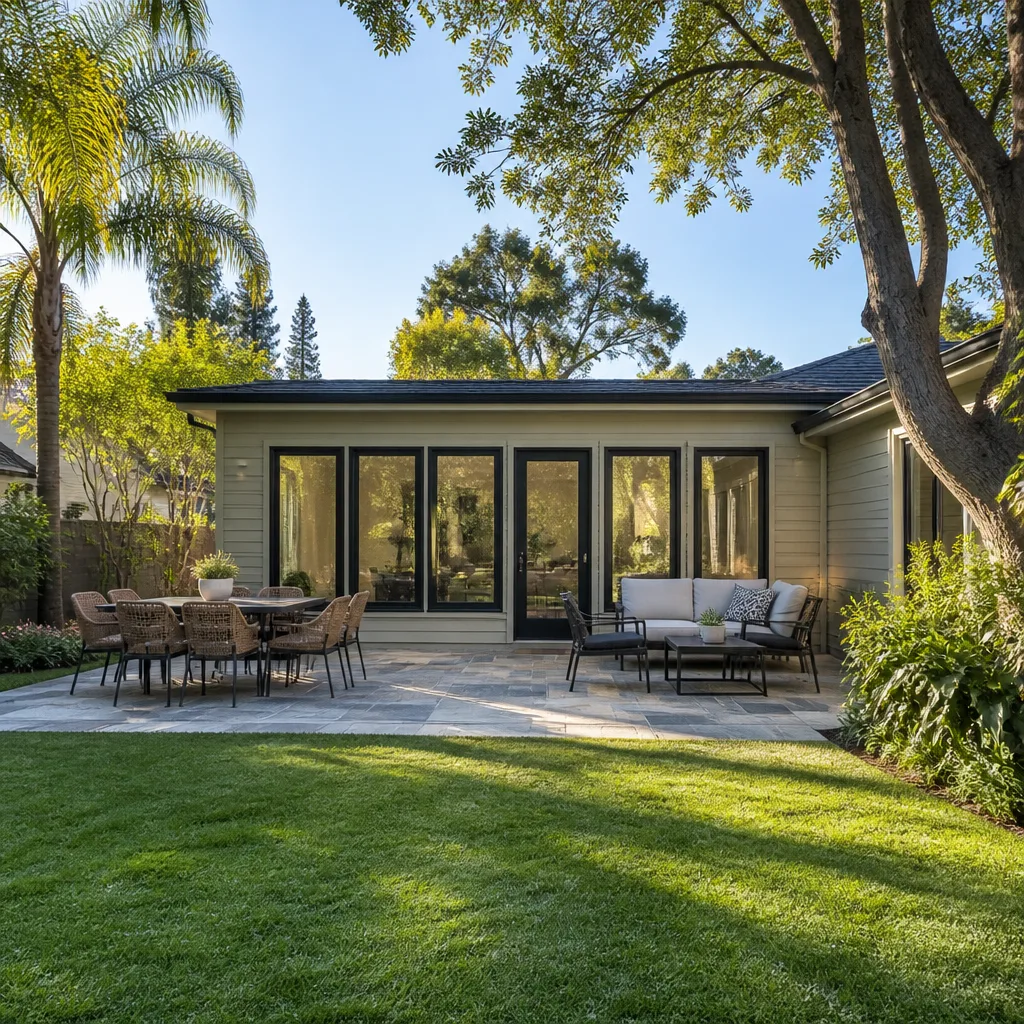
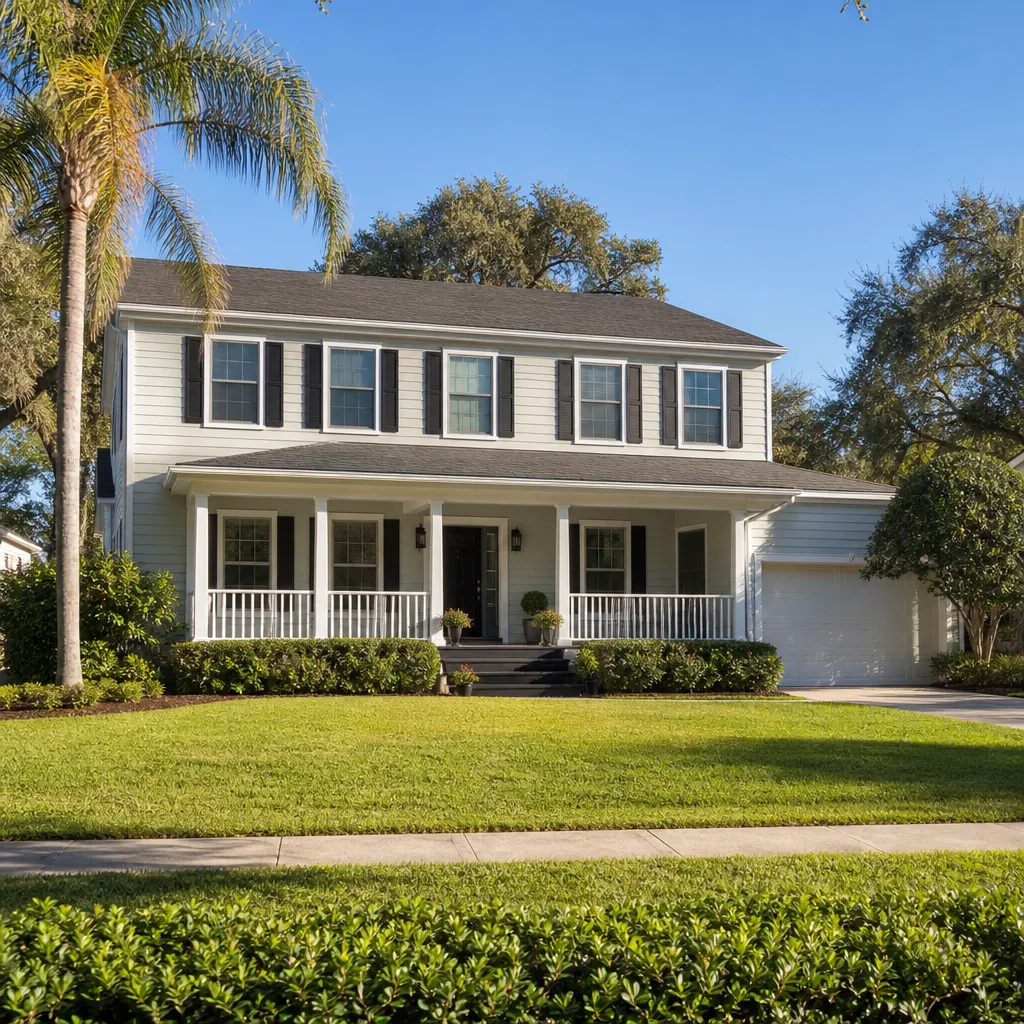
We work with the full James Hardie line: HardiePlank lap siding, HardiePanel vertical siding, HardieShingle, HardieTrim boards, and HardieSoffit. Most additions in Austin built after 2005 use HardiePlank in 4×8, 5.25×12, or 6.25×12 exposure profiles, with either ColorPlus factory finish or primed board painted on site. Identifying which one you have matters because the ColorPlus finish carries a 15-year finish warranty, while primed board is only covered for 15 years on the substrate itself. If your siding was painted after install, you’re holding primed product, and the failure you’re seeing may be a paint issue rather than a James Hardie issue.
On the OEM versus aftermarket question: for James Hardie specifically, there’s no real aftermarket equivalent that matches the fiber cement formulation and warranty. We use genuine James Hardie on every addition and ADU we build. Substituting vinyl or wood-look composite in an Austin addition will read as a patch job from the street, and composities don’t carry the same hail and moisture performance in Central Texas. Where aftermarket matters is in the trim: HardieTrim is the OEM product, but we’ll spec PVC trim board from certain manufacturers when the detail calls for ground-contact zones or extreme exposure areas near irrigation spray.
Styles & brands we work with







Signs Your James Hardie Home Additions & ADU Is Failing
- Visible cracking at plank ends or around fastener heads. Fiber cement expands and contracts with Austin’s temperature swings, and if the installer butted planks too tight or nailed too close to the edge, you’ll see hairline cracks that widen each season. This is the most common install error we correct on additions built before 2015.
- Water staining on interior drywall at the addition’s ceiling line or corners. This almost always means the flashing between the new roof and the original house was underlapped or missing kickout flashing at the transition. Water finds that seam and runs inside for months before the stain shows.
- Swollen or delaminating siding at the bottom course near grade. Hardie requires 6 inches of clearance from soil or hardscape. Additions poured with the slab too low, or yards where Austin clay has built up against the wall, trap moisture in the fiber cement and it starts to swell and crumble.
- Gaps opening at the joint where the addition meets the original house. Austin’s clay soils move. If the addition’s foundation wasn’t engineered for the soil type, you’ll see separation at the seam, and that gap becomes a water and pest entry point. This is a structural issue, not a caulk issue.
- Mold or mildew streaking down the siding face from the roofline. The addition’s eave overhang may be undersized for Austin’s rainfall, or gutter placement on the new roofline is dumping water onto the wall below. Hardie itself doesn’t mold; what you’re seeing is organic material feeding on trapped dirt because the wall never dries out.
See the difference
 Before
 After
After Before
 After
After Before
 After
AfterReplacement Cost & What’s Included
When a James Hardie addition has failed structurally or the siding needs full replacement, Austin homeowners should budget $45,000 – $130,000 for a complete tear-off and rebuild with proper flashing, drainage, and Hardie installation. If the failure is isolated to one wall or one seam and the framing is sound, a targeted repair runs $3,500 – $15,000 depending on how far the water damage traveled. For a new ADU, the full construction range is $90,000 – $220,000, with the variance driven by site access, foundation type, utility runs, and whether your lot sits in a floodplain or historic district.
Every quote we write is a line-item price delivered before any work starts. You’ll see the cost of demolition and disposal, framing and structural repair, flashing and weather-resistive barrier, James Hardie material at current supplier pricing, fasteners, paint, and our labor. What you won’t see is an allowance column that quietly grows. Our work carries a written guarantee for 365 days from the completion date, and if something’s not right within that year, we fix it at no cost and send a second visit free.
| Project Type | Austin Installed Range |
|---|---|
| Targeted James Hardie wall repair | $3,500 – $15,000 |
| Full home addition (Hardie exterior, finished interior) | $45,000 – $130,000 |
| ADU construction (permit to keys) | $90,000 – $220,000 |
| Garage conversion with Hardie siding match | $30,000 – $80,000 |
DIY or Call Us?
There are two things an Austin homeowner can safely check before calling us. First, walk the addition’s perimeter and look at the bottom course of siding: if soil, mulch, or hardscape material sits within 6 inches of the plank bottom, grab a shovel and pull it back. That gap exists for a reason. Second, check the caulk joints at window and door trim: if you see shrinking, cracking, or gaps, you’ve found a maintenance item, not a failure. Recaulking those joints is within most homeowners’ ability and buys you months before water finds a way in.
What you should not do is pull siding off a James Hardie wall to investigate water damage. Once you open the wall, you’re committed, and what you’ll find underneath in Austin is rarely what you expected. We’ve opened walls in Mueller, Allandale, and Crestview where a single failed seam had been feeding mold into the stud cavity for years behind perfectly clean drywall. If the staining is inside the house, the failure is already structural. Call us at (903) 623-1966 and tell me what’s wrong with it. We’ll figure out what it actually needs.
FAQs

A properly installed James Hardie addition in Austin lasts 30 – 50 years on the siding itself, with the 15-year finish warranty on ColorPlus product serving as the realistic repainting timeline. The weak points in Central Texas aren’t the fiber cement; they’re the flashing details, foundation movement, and gutter systems around the addition. A well-built addition with a poorly designed eave will show problems in 7 – 10 years, which is why we spec the overhang and drainage before we spec the siding profile. Call (903) 623-1966 if you’re seeing signs earlier than that.
Yes, if the framing is dry, the foundation is stable, and the failure is isolated to one wall plane or seam. We repair single-wall James Hardie failures in Austin regularly, matching the existing plank profile, exposure, and color so the repair isn’t visible from the curb. The decision hinges on what’s behind the siding. If water reached the sheathing or studs, the repair becomes a rebuild. We’ll open the wall, show you what’s there, and give you the repair price and the rebuild price side by side before you spend another dollar.
A full James Hardie home addition in Austin takes 10 – 16 weeks from permit to final walkthrough. A standalone ADU runs 4 – 8 months depending on utility connections and city inspection scheduling. The permitting timeline at the City of Austin is the variable we can’t control, but we pull permits on every project and handle the inspections end to end. What we can control is the build schedule once permits clear, and we’ll put the timeline in writing alongside the price.
We stock common James Hardie plank profiles, trim boards, and flashing materials at our Austin shop, and we order project-specific ColorPlus colors and panel sizes per job. If you need a repair matched to an existing addition, we’ll pull the color code from the old siding or take a sample to our supplier for a match. We also work with KraftMaid, Cambria, and Silestone on interior finishes for additions and ADUs, so the exterior and interior materials come from the same vetted supply chain.
Written by Isaac Pruett, Owner, Mason Remodeling Co Austin at Mason Remodeling Co Austin, serving Austin and nearby areas.
Ready to get a straight answer on your James Hardie addition or ADU? Call (903) 623-1966 for a free estimate. A live person answers, day or night, and you’ll get a written price before any work starts.


