


Free written scope consultation - allowances, timeline, and change-order rules on paper before a single trade is scheduled
CGI Home Additions & ADU: The Austin Owner’s Guide
If you have a CGI home addition or ADU that’s showing structural or finish problems, we can help. Mason Remodeling Co Austin installs and repairs CGI-compatible additions and accessory dwelling units throughout Austin, with most full projects running $45,000 – $130,000 depending on square footage and site conditions. We’re an independent contractor, not affiliated with CGI directly, but we work with their product lines regularly and know their framing connections, tie-down specs, and finish tolerances cold.
Most homeowners call us after noticing one of two things: either the addition has started settling in a way that doesn’t feel right, or the ADU’s finishes and systems aren’t holding up the way they should in Austin’s heat and shifting clay soils. You might see drywall cracks that keep coming back, doors that suddenly won’t latch, or flooring that’s started to separate at the seams. The underlying cause is usually the same: something in the original install wasn’t spec’d right for our soil and weather, and now it’s showing up three or five years later.
Key Takeaways:
- Typical installed cost for CGI home additions in Austin: $45,000 – $130,000
- We carry or can source CGI-compatible framing hardware and finish components same-week
- Every project gets a written price before work starts, with no change orders unless you approve them in writing
- 365-Day Done Right Promise: if it’s not right within a year of completion, we make it right at no cost to you
Which CGI Models This Applies To
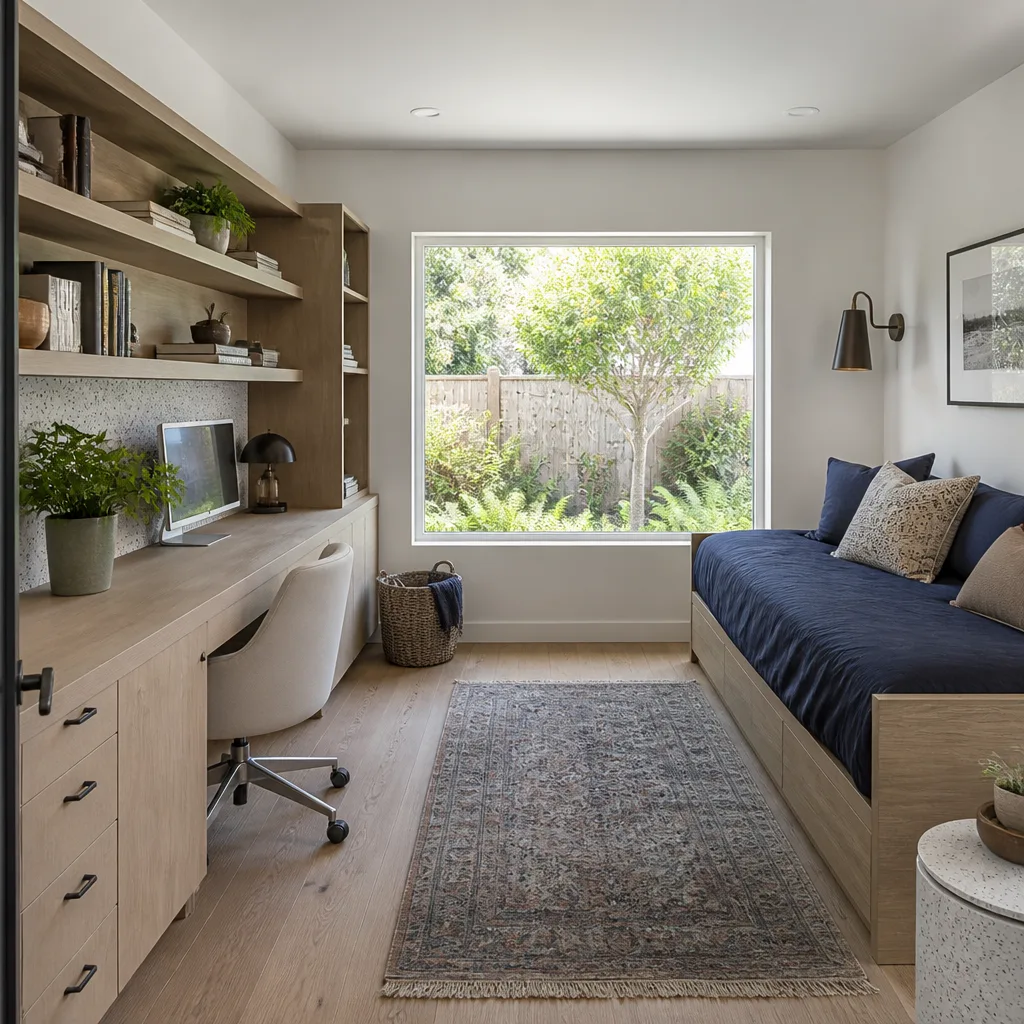
CGI’s home addition and ADU product lines vary by generation, and the compatibility gotchas are real. Older CGI addition kits (pre-2018, roughly) used 2×4 framing with standard Simpson Strong-Tie connectors. Their newer ADU shells switched to 2×6 exterior walls with upgraded hurricane ties rated for 110 mph wind loads, plus a different sill plate anchor spacing. If you’re replacing a failed connection or section, matching the hardware generation matters more than matching the wall dimensions.
Here’s how to identify what you have. Look for the CGI stamp on any exposed framing member near the base plate or header. It’ll show a series number: CGI-A (original addition line), CGI-ADU100 (first-gen ADU), or CGI-ADU200 (current ADU with the upgraded envelope). If the stamp is painted over or missing, measure the exterior wall thickness: 4-1/2 inches means 2×4 construction (CGI-A or early ADU100), 6-1/2 inches means the newer 2×6 shell. That one measurement tells us which hardware package we’re pulling from the truck.
On the OEM versus aftermarket question for CGI specifically: OEM CGI hardware is fine but carries a markup and sometimes a two-week lead time. For most repairs, we use Simpson or USP connectors that meet or exceed the original spec, and we tell you upfront which one we’re quoting. The finish components (trim, siding, window flashing) are more forgiving; we’ll match the CGI profile with a quality aftermarket equivalent if CGI’s version is backordered or priced unreasonably. If you’d prefer OEM across the board, say so and we’ll quote it that way.
Styles & brands we work with







Signs Your CGI Home Additions & ADU Is Failing
- Drywall cracks at corner junctions that reappear after patching. This points to framing movement at the connection between the addition and the main structure. In Austin’s expansive clay, the two foundations often move differently, and the junction is where that stress shows first.
- Doors that latch in winter but not in summer, or vice versa. Seasonal racking is common in additions built on pier-and-beam without proper cross-bracing. The humid season swells the framing, the dry months shrink it, and the door reveals shift by an eighth inch or more.
- Gaps opening at the baseboard or floor edge on the south and west walls. Direct sun exposure on those walls in July and August causes thermal expansion that a poorly anchored sill plate can’t resist. The wall assembly literally pulls away from the floor deck.
- Musty smell in the ADU that doesn’t resolve with cleaning. Austin’s humidity plus a missing or improperly lapped moisture barrier on the CGI envelope lets condensation build inside wall cavities. You smell it before you see it, usually around the base of exterior walls.
- Roof-to-wall flashing separation, especially after a wind event. The CGI ADU200 and addition lines use a specific flashing profile that can pull loose if the original fasteners were overdriven or set into damp framing. Water intrusion follows quickly in our storm season.
How Much Does a CGI Home Addition or ADU Repair Cost in Austin?

In Austin, most CGI addition and ADU repair projects fall between $45,000 and $130,000 installed, depending on scope, square footage, and whether we’re repairing an existing structure or building new from the CGI shell up. A focused structural repair (re-anchoring a wall, replacing failed connectors, re-flashing a roofline) typically lands under $10,000. A full ADU build on a CGI-ADU200 shell with finished interior systems runs toward the top of the range.
| Scope | Typical Austin Installed Range |
|---|---|
| Structural repair (anchors, connectors, bracing) | $4,000 – $12,000 |
| Partial addition rebuild | $25,000 – $65,000 |
| Full home addition (CGI-A or equivalent) | $45,000 – $130,000 |
| Full ADU construction (CGI-ADU200 shell) | $90,000 – $220,000 |
| Garage conversion | $30,000 – $80,000 |
What drives the range: soil conditions on your lot (we’ve done enough work in the Mueller neighborhood to know which blocks have the worst clay movement), whether the original framing was properly treated, and how much of the existing finish work has to come out to access the failure. Every quote includes parts and labor separated, so you see exactly what you’re paying for. We write the price down before we start, and that number doesn’t move unless you ask us to change the scope in writing.
The workmanship warranty on CGI addition and ADU repairs is 365 days from the completion date. If something we fixed fails within that window, we’re back out at no charge. That’s the whole point of the Done Right Promise.
See the difference
 Before
 After
After Before
 After
After Before
 After
AfterStock and Availability: What We Carry
We stock common CGI-compatible hardware on the truck: Simpson H-series connectors, anchor bolts, hold-downs, and the flashing profiles from the CGI-A and ADU200 lines. Finish components like trim and siding usually depend on your specific CGI series and color, and those take a few days to source here in Austin. If your part is genuinely obsolete or the CGI stamp has a series number we don’t recognize, we’ll tell you that upfront and give you options, including OEM ordering with the lead time spelled out.
DIY or Call Us?
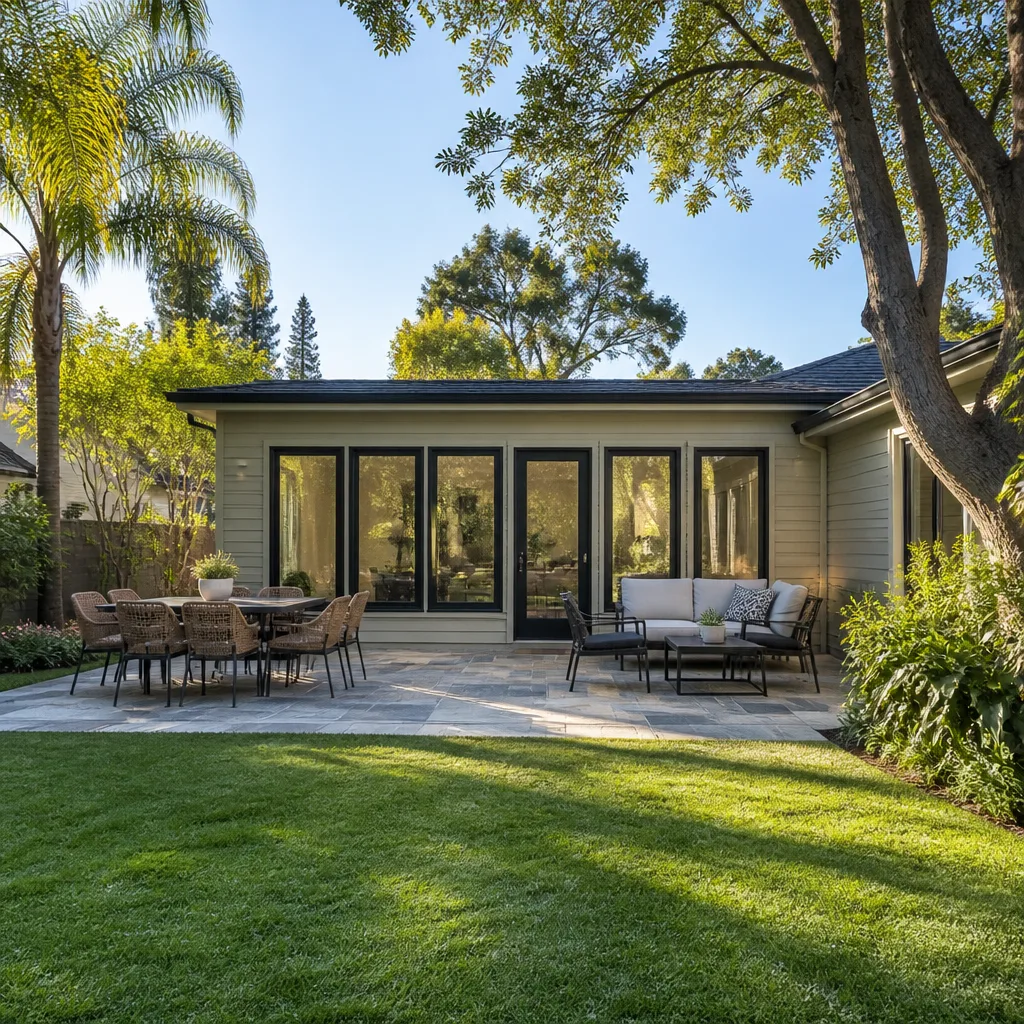
Some checks you can do yourself, safely. Look at the outside corners where the addition meets the main house. Look at the roof flashing line. Look for daylight under wall plates from the crawlspace or slab edge. Those observations help us quote faster.
What you shouldn’t do is start pulling off drywall, re-anchoring framing, or re-flashing a roofline. Framing is under load. The moment you remove a connector, that load transfers somewhere you didn’t plan for, and that’s how walls move and people get hurt. Roofline work means ladders and heights. The same goes for any electrical or plumbing that runs through the addition’s walls. Tell me what’s wrong with it. We’ll figure out what it actually needs.
If you’re seeing cracks, gaps, or moisture where you shouldn’t, call (903) 623-1966. We’ll walk you through what we think is going on over the phone, then schedule a look.
FAQs
A properly installed CGI addition with correct moisture management and foundation anchoring should last 50-plus years structurally. What we see in Austin is that the finish envelope (flashing, sealants, exterior trim) needs real attention every 10 to 15 years because of the heat cycling and UV exposure. The structure rarely fails first; the water management layer does. Call (903) 623-1966 and we’ll assess which one is actually causing your problem.
Most failures we see in Austin are repairable: failed connectors, separated flashing, minor settling. A full rebuild only makes sense when water has sat in the framing long enough to rot load-bearing members, or when the original anchoring was so undersized that the structure has moved inches rather than fractions. We’ll tell you which situation you have, with photos, and quote the fix in writing.
A focused structural repair usually takes two to five working days. Anything involving finish work, drywall, paint, or flooring adds time on the back end. We give you a schedule in the written quote, and we hit it. If weather delays exterior work in Austin’s storm season, we tell you as soon as we know and reschedule.
We stock the common hardware and flashing for CGi-A and CGI-ADU200 series locally. Specialty finish components or paint-matched trim may take a few days to source. We quote the lead time as part of the written estimate, so there are no surprises. Call (903) 623-1966 and we’ll confirm stock for your specific series.
Ready to Get Your CGI Addition or ADU Right?
Call Mason Remodeling Co Austin at (903) 623-1966 and tell us what you’re seeing. We’ll give you an honest read over the phone, then schedule a visit with a written quote to follow. No pressure, no surprises, just a straight answer and a fixed price. Isaac Pruett and the crew have been fixing and building additions and ADUs across Austin for years, and we’ll treat your place like it’s our own.
Written by Isaac Pruett, Owner, Mason Remodeling Co Austin at Mason Remodeling Co Austin, serving Austin and nearby areas.


